
best salt to melt ice on driveway
Best Salt to Melt Ice on Your Driveway (What Actually Works, and When)
The real question here is, what is the best salt to melt ice on a driveway that actually works? A slick driveway isn’t just annoying, it’s a fall waiting to happen. Then there’s the other problem: you throw down a bunch of salt, it seems to work, and the next morning everything’s frozen again. Now you’ve wasted money, tracked grit into the house, and maybe stressed your concrete and lawn.
If you’re searching for the best salt to melt ice on driveway surfaces, the honest answer is that there isn’t one perfect choice for every home. The best pick depends on the temperature, what your driveway is made of, and how much you care about pet paws and nearby plants. One thing is universal, though: using more salt doesn’t melt ice faster; it just increases runoff and damage risk.
Start with the temperature, because every ice melt has a limit
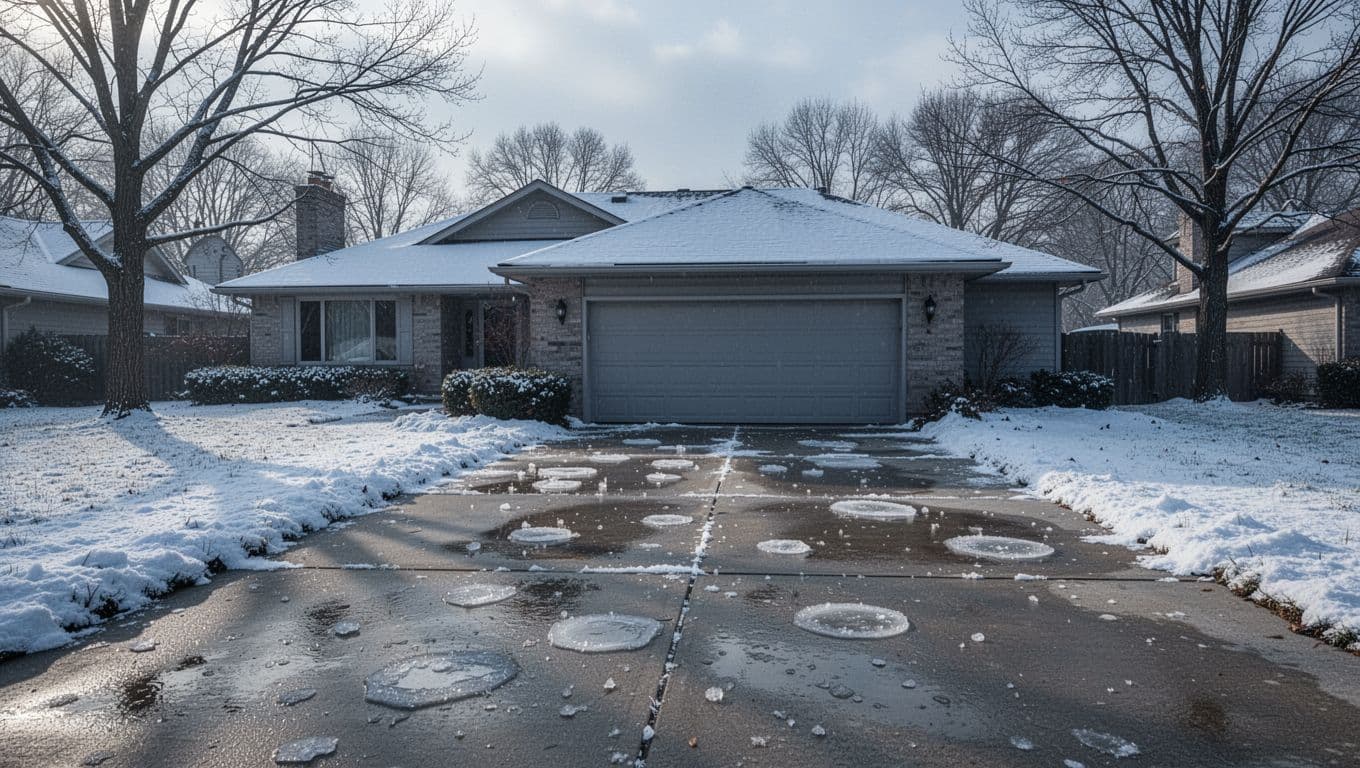 An icy driveway with patchy snow, the kind of surface where temperature makes or breaks how well ice melt works. best salt to melt ice on driveway
Ice melt works by lowering the water’s freezing point. That matters because a product that performs well at 25°F can feel almost useless when the temperature drops close to 0°F. It also explains why overapplying doesn’t help much. Once the melt has made brine (salty water), it still needs enough warmth to keep working.
A practical way to shop is to match your product to the forecast, not the calendar:
- Above about 20°F: gentler options can do the job, and you can often use less.
- Around 5°F to 20°F: common “pet-friendlier” blends and magnesium chloride tend to perform well.
- Below 0°F: you usually need calcium chloride or a strong blend that contains it.
Also consider where the ice forms. Shaded strips, the bottom of the driveway near the street, and areas with poor drainage freeze first and refreeze often. Those are the spots where paying for a stronger melt makes sense, even if you use a milder product elsewhere.
If you want a consumer-friendly overview of how different melts stack up, see The Spruce’s roundup of top ice melts, then use the temperature rating to narrow your options.
If it’s below 0°F, calcium chloride is usually the most reliable option
When it’s truly bitter out, calcium chloride is the workhorse. It can keep working in very low temperatures (often down to about -25°F), and it tends to act fast because it releases heat as it dissolves. In plain terms, it doesn’t just wait around for the sun to help.
That said, it comes with tradeoffs. It usually costs more than rock salt, and if you dump it on heavily, you can increase lawn burn after the meltwater runs off. Some people also notice a slick feeling while it’s actively dissolving, especially if you’ve created too much brine in one area.
A smart approach is to use calcium chloride like a scalpel, not a paint roller. Save it for short cold snaps and problem zones like steps, sloped sections, and shaded areas that don’t see midday sun. You’ll get the safety benefit without coating the whole driveway in unnecessary chloride.
For most winter days, magnesium chloride is a safer balance for pets, plants, and concrete
For many U.S. winters, magnesium chloride hits the sweet spot: it often performs well around -10°F to 5°F (exact performance varies by formula), and it’s generally gentler than straight rock salt on concrete and landscaping. It’s also popular in “pet-conscious” products because it’s typically less harsh and less drying than coarse sodium chloride crystals.
“Safer” doesn’t mean “harmless,” though. Ice melts can be abrasive, and repeated contact can leave paws and skin irritated. Ingestion is a bigger concern. Common salts (including sodium chloride) can be dangerous if pets or kids eat them, so storage and cleanup matter as much as what you buy. Keep the bag sealed, don’t leave pellets where a dog can snack on them, and rinse paws after walks.
Compare the main driveway salts by cost, speed, and damage risk
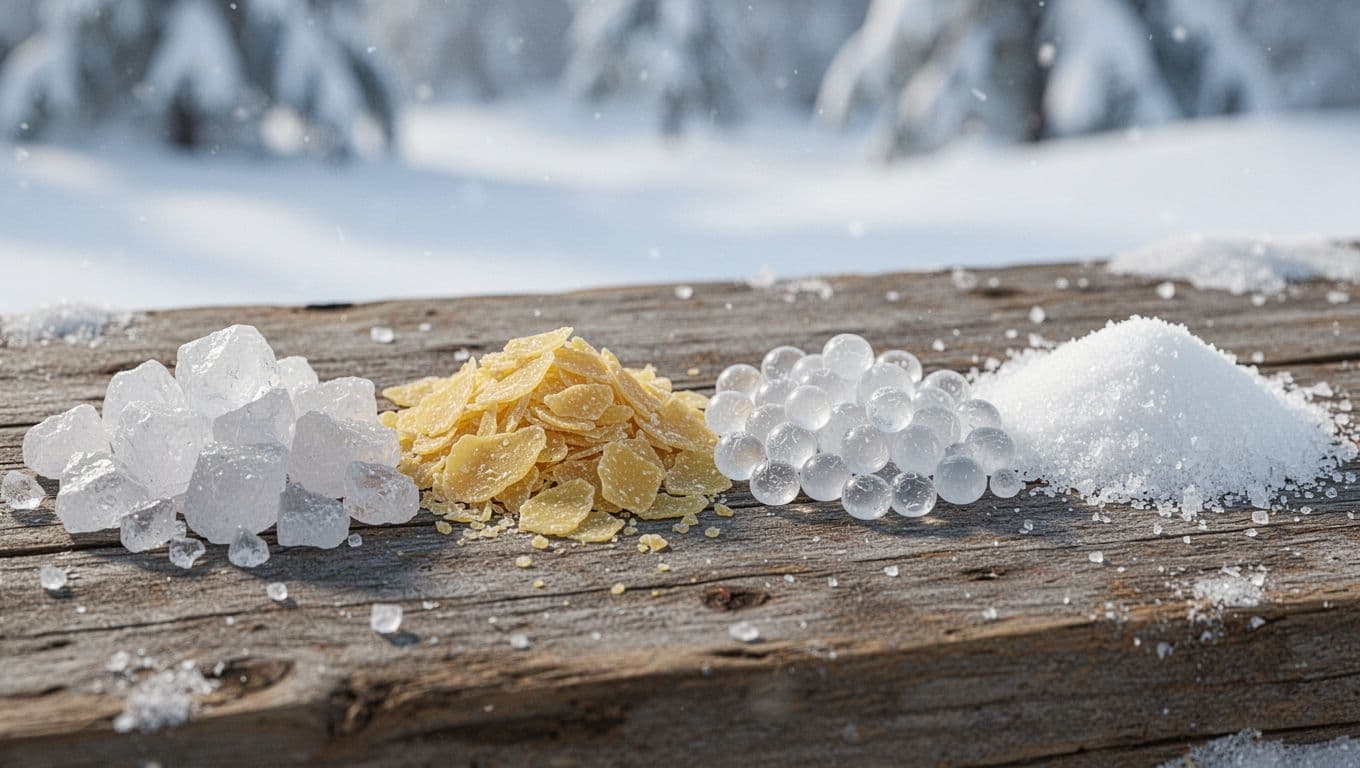 Common ice melt materials side by side, showing how different “salts” vary in shape and texture. best salt to melt ice on driveway
Homeowners usually want one of four things: the cheapest option, the fastest melt, the least damage, or the most eco-minded choice. The catch is that you rarely get all four at once.
If your top priority is price, sodium chloride (rock salt) usually wins. If your priority is performance in deep cold, calcium chloride is hard to beat. If you’re trying to reduce concrete and plant stress, magnesium chloride and non-chloride options can be easier on surfaces, especially when used lightly and cleaned up afterward.
One key point for concrete driveways: damage often shows up through the freeze-thaw cycle. Rock salt doesn’t “eat” concrete like acid, but it can increase the chance that melted water seeps into tiny cracks and refreezes, widening them over time. That’s one reason older driveways can start to look rough after winters of heavy salting.
If you want ideas beyond rock salt, including environmentally gentler approaches, this overview of alternatives to rock salt is a helpful starting point.
Rock salt (sodium chloride) is cheap, but it’s the hardest on concrete and landscaping
Rock salt is widely available and works best in milder cold, often around 15°F to 20°F (conditions matter, sun and traffic help). The big downsides are surface wear and runoff. As meltwater moves off the driveway, it can stress grass and nearby plants. On concrete, heavy use can contribute to scaling and roughness over time, especially where water pools and refreezes.
Safety matters here, too. Sodium chloride can be risky if swallowed, and the crystals can scrape paws. If your dog uses the driveway as their main path, rock salt is the last thing you want to pile near the door.
Potassium chloride and calcium magnesium acetate (CMA) are gentler choices, but have tradeoffs
Potassium chloride is often marketed as a gentler option than rock salt. It can be less damaging to concrete and landscaping in many situations, but it usually doesn’t work well in deep cold. Expect it to perform best around 20°F and above, and plan on paying more per bag than basic rock salt. It can still harm plants if overused, especially with repeated runoff in the same areas.
CMA (calcium magnesium acetate) is often the “pay more, worry less” choice. It’s typically among the safest options for concrete, and it’s often favored by households that prioritize pets and the environment. The tradeoff is cost, and performance is best in milder weather (around 20°F and up), though it can still help loosen the bond between ice and concrete closer to 0°F.
CMA is most worth it on newer driveways, stamped or decorative concrete, or homes with sensitive landscaping and frequent pet traffic.
How to use ice melt the right way, so it works better and causes less damage
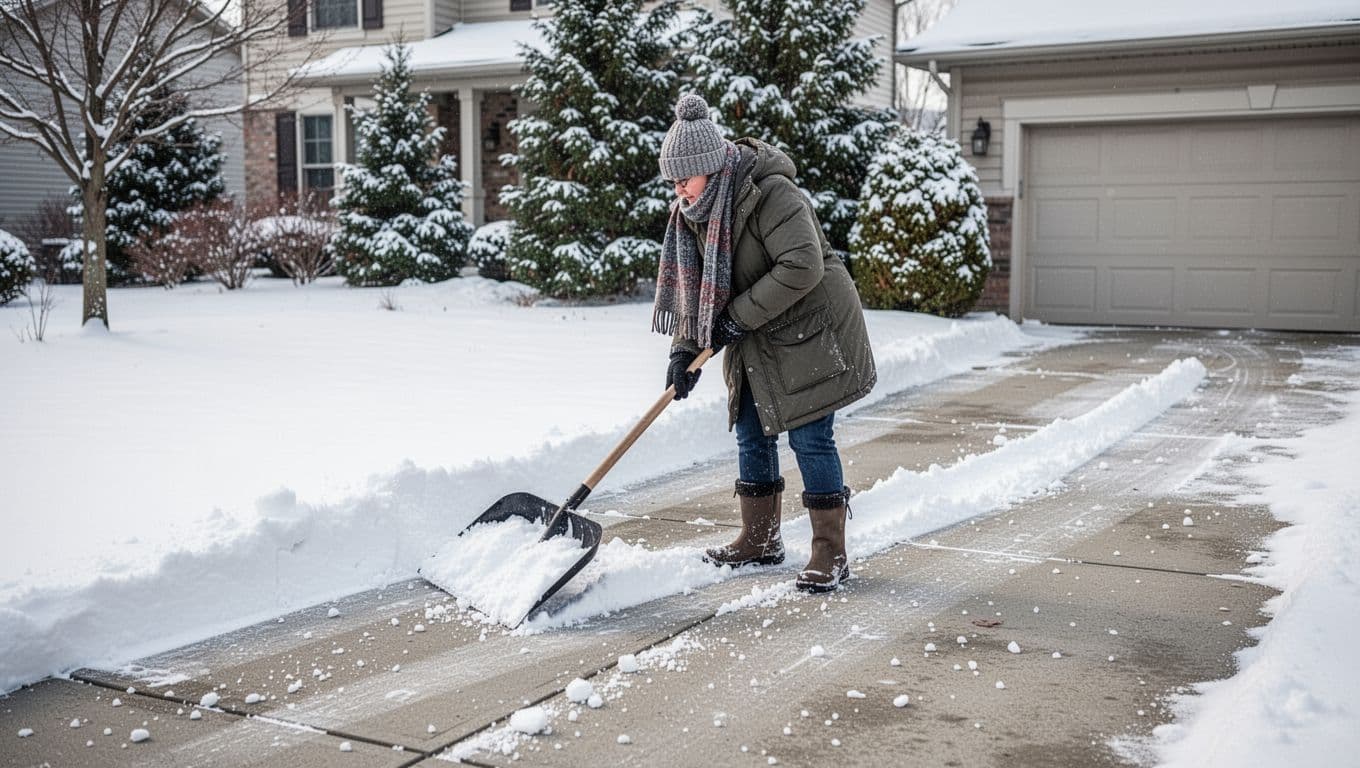 Shoveling first and then applying a light amount of ice melt is the routine that usually works best, created with AI.
Most “ice melt failed” stories are really “ice melt was used wrong” stories. The goal isn’t to carpet your driveway in crystals. It’s to create just enough brine to break the bond between ice and the surface, then remove the slush.
A solid rule of thumb is a light scatter, not piles. If you can’t see the driveway between heaps, you used too much. Many products suggest application rates around 2 ounces per square yard, which is far less than most people guess by eye. And remember: meltwater carries salt into your lawn when temperatures rise.
Also, be careful with brand-new or unsealed concrete. Some finishes are more vulnerable during their early life, and strong salts can increase surface wear. When the weather warms and everything’s cleared, rinsing residue off can reduce tracked-in grit and leftover film.
For more practical safety guidance, Consumer Reports’ tips on using ice melt without causing damage align well with what contractors recommend.
A simple routine, shovel, scatter evenly, then spot-treat slick areas
Use this approach when snow or sleet hits:
- Shovel first so the melt can reach the ice instead of sitting on fluffy snow.
- Scatter evenly across the area you actually walk and drive on.
- Wait for it to work, then shovel or scrape the loosened slush.
- Spot-treat the worst areas (end of driveway, slopes, shaded patches) rather than salting every inch.
Even coverage matters because it increases contact with the surface. Piling salt in one spot doesn’t speed melting, it mainly wastes product and increases runoff.
Keep pets, kids, and lawns safer with quick cleanup habits
A few small habits reduce the downsides of any ice melt:
- Pick a pet-friendlier formula when possible, often magnesium chloride or CMA.
- Wipe and rinse paws after walks, even with “safer” products (abrasion and irritation still happen).
- Wash your hands after spreading the melt; many products can dry or irritate your skin.
- Sweep up leftovers when the sun comes out, especially near grass edges and entryways.
- Store bags sealed and out of reach, since some common salts can be toxic if eaten.
Best salt to melt ice on driveway Conclusion
The best choice comes down to your weather and your priorities. Use calcium chloride when it’s below 0°F, and you need to melt fast. For many households, magnesium chloride is the best all-around balance of performance and lower damage risk. Stick with rock salt only when temperatures are mild, and budget is the main driver. If you want the gentlest option for surfaces and pets, and cost isn’t the deciding factor, CMA is hard to beat. No matter what you buy, how you apply it is the difference maker: shovel first, spread a light even layer, and clean up paws and residue afterward. All in all, these are your options for the best salt to melt ice on the driveway
About the Author


